There's a unique power in a song that speaks directly to your soul, especially when it whispers (or shouts!) the truth you desperately need to hear: You are enough. You are valuable. You are worth it. These aren't just catchy tunes; they're sonic anchors in moments of doubt, empowering you to stand a little taller. When you're searching for "Songs Like "Am Worth It": Exploring Self-Worth Anthems," you're not just looking for music; you're seeking a playlist of personal affirmation, a soundtrack to your journey of self-discovery and unconditional self-acceptance.
This guide will help you understand what makes a true self-worth anthem, equip you with the knowledge to cultivate your own deep sense of value, and show you how to find more music that resonates with the inherent worth you already possess.
At a Glance: Your Roadmap to Self-Worth
- Self-worth is your deep, unwavering belief in your inherent value as a person.
- It's distinct from self-esteem or self-confidence, which are often tied to actions or specific abilities.
- External factors like appearance, job, or others' opinions do not determine your worth.
- You are the sole determinant of your self-worth.
- Building self-worth involves self-reflection, challenging negative self-talk, and practicing self-compassion.
- A strong sense of self-worth improves relationships and career satisfaction.
- Music, like "Am Worth It," can be a powerful tool for reinforcing these truths.
The Echo Chamber of Your Soul: Why Self-Worth Anthems Matter
Think about that moment a song hits just right. The melody swells, the lyrics pierce through the noise, and suddenly, a truth you've struggled to articulate clicks into place. Self-worth anthems function as this kind of powerful resonance. They don't just entertain; they validate, inspire, and remind you of the profound, often forgotten, value that resides within you.
In a world constantly pushing external metrics of success and happiness, it's easy to lose touch with your inner compass. Self-worth, at its core, is the unwavering feeling that you are a good person who deserves respect. It’s the deep, quiet knowledge that your existence alone makes you significant. Songs like "Am Worth It" tap into this fundamental human need, transforming abstract concepts of self-acceptance into tangible, repeatable affirmations that you can carry with you throughout your day. They are more than just tunes; they are reminders of your unique brilliance, your capacity for resilience, and your inherent lovability, regardless of external circumstances.
Untangling the Threads: Self-Worth vs. Its Cousins
Before we dive deeper into discovering your next empowering anthem, let's clarify what self-worth is and isn't. These terms often get muddled, but understanding the distinctions is crucial for truly building an unshakeable sense of self.
- Self-worth: This is the bedrock. It's the inherent, unconditional belief that you are valuable simply because you exist. It's a fundamental feeling that you are a good person deserving of respect. As Dr. Christina Hibbert puts it, self-worth is a "deeper knowing of one's inherent value, lovability, necessity, and incomprehensible worth, transcending those beliefs" often associated with self-esteem.
- Self-value: While closely related, self-value leans more into action. It's about how you act toward what you value, including yourself. If you truly value yourself, your behaviors will reflect that – you'll protect your time, nurture your body, and pursue your goals.
- Self-esteem: Often confused with self-worth, self-esteem is what you think, feel, and believe about yourself. It's an evaluation, and it can fluctuate based on performance, social feedback, or mood. If your self-esteem is tied to how well you perform at work or how many compliments you receive, it's conditional.
- Self-confidence: This relates to your competence in specific areas. You might be highly self-confident in your ability to bake a cake or give a presentation, but that doesn't necessarily mean you have high overall self-worth. You can possess high self-worth while having low self-confidence in a particular skill, recognizing that a momentary lack of skill doesn't diminish your overall value as a person.
The key takeaway? Self-worth is the most fundamental and enduring of these concepts. It's the quiet certainty that remains even when your confidence wavers or your achievements feel small.
The Hidden Architecture: How Self-Worth Works (and Why It's Often Misunderstood)
Our understanding of self-worth often gets tangled up in societal expectations and personal achievements. The Self-Worth Theory, proposed by Covington and Beery in 1976, suggests that individuals prioritize self-acceptance, often seeking it through perceived achievements and competition. This model links Ability, Effort, and Performance directly to self-worth, implying that success in these areas boosts our sense of value. While achievement can certainly make us feel good, true self-worth isn't dependent on these fleeting external metrics.
What Doesn't Determine Your Self-Worth (And Why It's So Easy to Get Wrong)
We live in a world that constantly bombards us with messages about what makes a person "worthy." It's no wonder we often fall into the trap of measuring our value by things that, ultimately, have no bearing on it. Stephanie Jade Wong highlights several common, unhealthy yardsticks we use:
- Appearance: How you look, your weight, your clothes.
- Net Worth & Money: The size of your bank account, your possessions.
- Social Circle: The number of friends you have, your popularity.
- Career/Job: Your title, your salary, your professional achievements.
- Achievements: Awards, promotions, grades, how far you can run.
- Social Media Following/Likes: The digital validation.
- Relationship Status: Being married, single, or in a partnership.
- Others' Opinions: What your boss, parents, or partner think of you.
- Your To-Do List: How productive you are.
- Age: Your chronological number.
These are external, changeable factors. Tying your fundamental value to them creates a fragile sense of self that can shatter with every setback or criticism. Imagine basing your worth on a job title, only to lose that job. If your worth was contingent on it, you'd feel completely worthless, even though your inherent value as a human being remains untouched.
The Uncomfortable (and Liberating) Truth: You Are the Only One Who Determines Your Self-Worth
Here's the most crucial, liberating, and sometimes challenging truth: you are the only one who determines your self-worth. If you believe you are worthy and valuable, you are, regardless of anyone else's opinion or any external circumstance. Your worth isn't a prize to be won, a goal to be achieved, or a status to be granted. It's inherent. It exists within you, an unshakeable truth, even if you don't always feel it. The journey is not about earning worth, but about recognizing the worth you've always had.
Crafting Your Own Anthem: Practical Steps to Build Unshakeable Self-Worth
Recognizing your inherent worth is a practice, a journey, not a destination. It requires intentional effort to dismantle old beliefs and cultivate new ones. Just as a powerful song provides a framework for emotional expression, these practical steps offer a framework for strengthening your inner resolve. Many people are looking for practical habits for boosting your self-worth, and these are excellent starting points.
1. Self-Reflection: Peeling Back the Layers
Take time to honestly examine how you currently evaluate yourself.
- Identify your "worth domains": In what specific areas do you tend to measure your value? Is it academic performance, physical appearance, social approval, financial success, or something else? Understanding these domains is the first step in detaching your worth from them.
- Distinguish evaluation from judgment: It's healthy to evaluate your actions to learn and grow ("I made a mistake in that project, what can I learn?"). It's unhealthy to evaluate your personal worth based on those actions ("I made a mistake, therefore I am a failure"). The former empowers learning; the latter threatens well-being.
2. Nurturing Self-Worth at Every Age
Building self-worth looks a little different depending on where you are in life:
- For Adolescents: This is a crucial developmental stage.
- Provide unconditional love and respect: Show them their value is inherent, not conditional on their grades, popularity, or athletic prowess.
- Offer opportunities for success: Help them experience competency and mastery in areas they enjoy, which boosts their sense of capability.
- For Adults: We often carry ingrained patterns from childhood or societal pressures.
- Shift your focus from external to internal: Remind yourself daily that your bank account, job title, attractiveness, or social media following do not define your worth. Instead, focus on cultivating and recognizing internal qualities like kindness, compassion, empathy, integrity, and respect for others.
- Challenge your critical inner voice: We all have one. Identify its criticisms. Are they factual, kind, or necessary? Often, they are none of these. Externalize this voice – give it a name, imagine it as a separate entity – and question its validity. Would you speak to a friend that way? Probably not.
- Consider setting healthy boundaries to protect your peace and energy, as this is a powerful act of self-worth.
3. Practicing Adam Sicinski's 5 Exercises for Developing Self-Worth
Psychologist Adam Sicinski outlines five powerful exercises you can integrate into your daily life:
- Increase Self-Understanding: Who are you without your job, your relationships, your possessions? What are your passions, your joys, your unique quirks? Acknowledge your struggles, fears, and strengths without judgment.
- Boost Self-Acceptance: This means forgiving yourself for imperfections and committing to accepting all parts of yourself – the good, the bad, and the messy – without judgment. It’s about embracing your humanity.
- Enhance Self-Love: Treat yourself with the same kindness, tolerance, generosity, and compassion you would offer a loved one. Use positive self-talk, celebrate small victories, and nurture your well-being.
- Recognize Self-Worth: Understand that your worth is an internal truth, independent of external validation. You are the only one who controls how you feel about yourself, and that feeling should be one of deep appreciation.
- Take Responsibility for Yourself: Acknowledge your personal power to influence life events and circumstances. This isn't about blaming yourself for everything, but recognizing your agency and capacity for choice.
The Ripple Effect: Why a Strong Sense of Self-Worth Changes Everything
Cultivating self-worth isn't just about feeling good; it profoundly impacts every area of your life, creating a positive ripple effect.
In Relationships: Love From Within
Healthy self-worth is the cornerstone of healthy relationships. If you rely on another person's love or approval to define your value, you're setting yourself up for disappointment and dependency. People with high self-respect tend to have more satisfying, loving, and stable relationships because they derive worth and happiness from within. They enter relationships as whole individuals, not seeking completion, but rather shared growth and connection. They are also better equipped to establish setting healthy boundaries to protect your peace, which is vital for any thriving connection.
In Careers: Your Value Beyond the Job Title
Tying your self-worth to your job or career is a dangerous gamble. Jobs can change, be lost, or simply fail to provide the fulfillment you seek. Your worth is far, far greater than your professional role. When you understand this, you approach your career with a healthier perspective. You pursue meaningful work, negotiate fairly, and recover more easily from setbacks, knowing that your identity isn't threatened by professional shifts. This mindset also helps in navigating challenges like tackling imposter syndrome and embracing your value in your professional life, reminding you that your capabilities are part of, but not the entirety of, your worth.
Beyond the Lyrics: Tools and Resources for Your Self-Worth Journey
While self-worth anthems provide powerful auditory reinforcement, there are many other tools and resources to help you deepen your understanding and commitment to your inherent value.
Assessing Your Self-Worth Landscape
- The Contingencies of Self-Worth Scale (Crocker et al., 2003): This 35-item scale helps you identify the specific domains (e.g., approval from others, physical appearance, academic competence, God’s love) where you tend to base your self-worth. Understanding these patterns is a vital step in shifting towards an unconditional sense of value.
Practical Worksheets & Exercises
- "About Me Sentence Completion" (for kids): A simple yet profound exercise that can also benefit adults, encouraging reflection on personal qualities.
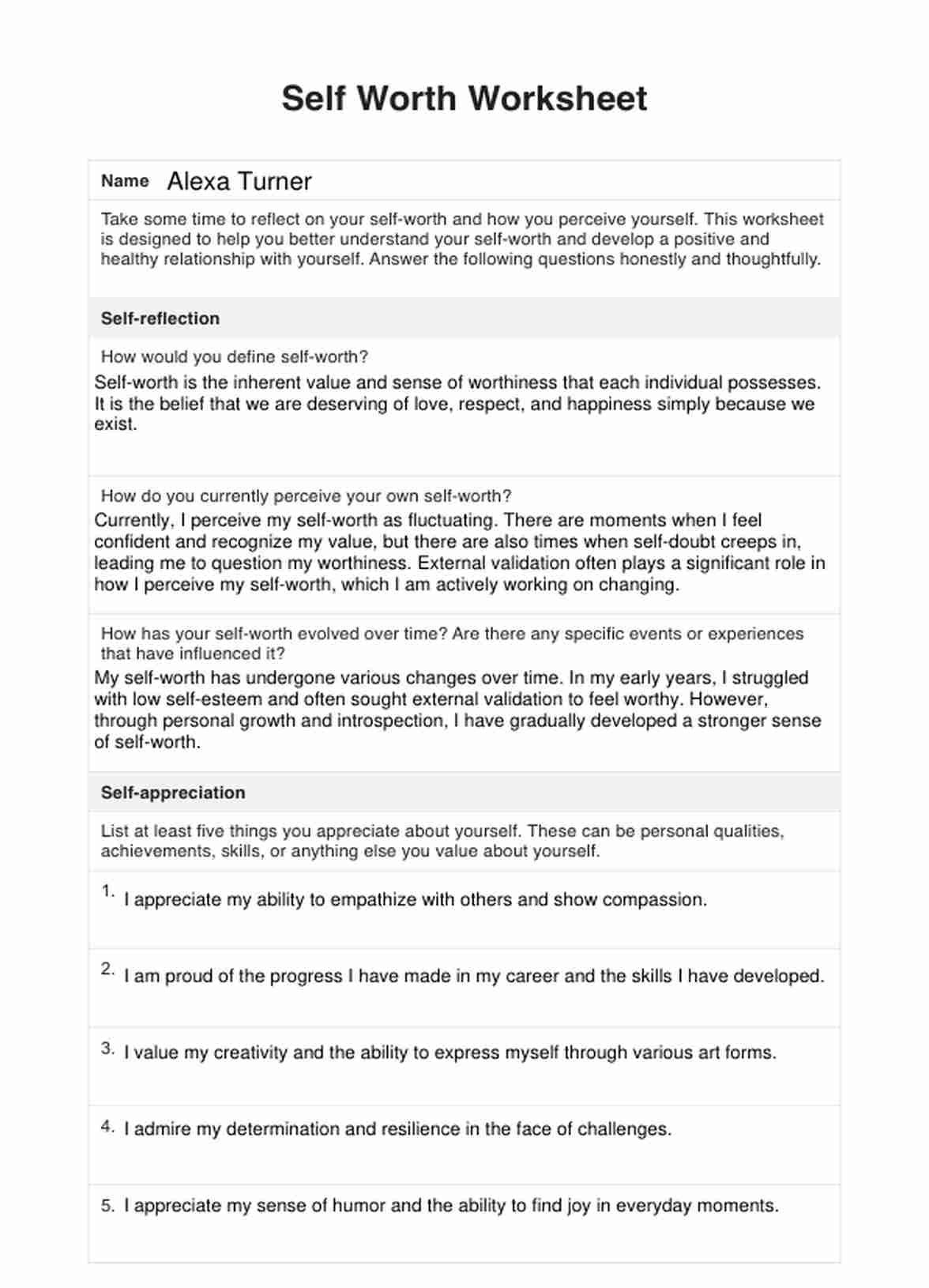
- "Self-Esteem Checkup" (general audience): This worksheet includes 15 statements rated 0-10 on belief in self, providing a snapshot of where you stand and areas for growth.
- Remember the 5 Exercises by Adam Sicinski mentioned earlier – they are practical daily practices. Incorporating how mindfulness can deepen your self-worth is also a powerful way to enhance self-awareness and acceptance.
Books for Deeper Exploration
- "The Gifts of Imperfection" by Dr. Brené Brown: A groundbreaking guide to embracing vulnerability, courage, and wholehearted living. It teaches you to let go of who you think you're supposed to be and embrace who you are.
- "What to Say When You Talk to Your Self" by Dr. Shad Helmstetter: Focuses on the power of self-talk and how to reprogram negative thought patterns.
- "Self-Worth Essentials" by Dr. Liisa Kyle: Offers a comprehensive framework for understanding and building authentic self-worth.
Inspiring Talks & Videos
- "Meet yourself: a user's guide to building self-esteem" (Niko Everett, TED Talk): A relatable and empowering talk on the journey to self-acceptance.
- "Claiming your identity by understanding your self-worth" (Judge Helen Whitener, TEDx): A powerful personal story illuminating the importance of defining your own value.
- "A clever lesson in self-worth" (Meir Kay, short video): Uses a simple dollar bill metaphor to powerfully illustrate that your worth doesn't diminish, no matter how "crumpled" you feel.
Your Playlist of Power: Finding Songs Like "Am Worth It"
Now, for the music! When seeking songs that resonate with "Am Worth It," you're looking for tracks that embody themes of:
- Self-Acceptance: Embracing imperfections and loving yourself fully, flaws and all.
- Resilience & Inner Strength: Standing tall through storms, recognizing your capacity to overcome. This is key to finding your inner strength and resilience.
- Unconditional Value: Knowing your worth isn't tied to external validation or performance.
- Authenticity: Celebrating your unique brilliance and refusing to conform.
- Overcoming Doubt: Challenging negative self-talk and reclaiming your power.
While "Am Worth It" serves as a fantastic blueprint, its power lies in its direct, affirmative message. You can explore the full "Am Worth It" lyrics here: the full Am Worth It lyrics.
When looking for other songs, consider artists who consistently champion self-empowerment and positive messaging. Think about songs that: - Have clear, declarative "I am" statements: Like "I am enough," "I am strong," "I am worthy."
- Describe overcoming adversity and emerging stronger.
- Celebrate individuality and uniqueness.
- Encourage setting boundaries and prioritizing one's own well-being.
- Focus on internal validation over external approval.
It's less about finding an exact lyrical match and more about identifying the feeling and message that resonates with your journey of self-affirmation. What makes a song an anthem is its ability to be sung aloud, to echo in your head, and to reinforce the truth that you are, always and unequivocally, worth it.
Confronting the Doubters: Common Misconceptions About Self-Worth
As you embark on or continue your self-worth journey, you might encounter internal resistance or external skepticism. Let's tackle some common misconceptions:
- "Believing in my self-worth makes me arrogant."
- Truth: Arrogance is an inflated sense of superiority, often masking insecurity. True self-worth is a quiet confidence and respect for yourself, which naturally extends to others. It's about knowing your value, not proclaiming yourself better than others.
- "If I mess up, I lose my self-worth."
- Truth: Your self-worth is inherent and unconditional. It does not diminish when you make mistakes, face failures, or experience setbacks. These are opportunities for learning and growth, not indictments of your core value.
- "Self-worth is only for people who are perfect or successful."
- Truth: This couldn't be further from the truth. Self-worth is the belief in your value regardless of your imperfections or achievements. In fact, it's often most crucial for those struggling with feelings of inadequacy or tackling imposter syndrome and embracing your value.
- "I need someone else to tell me I'm worthy."
- Truth: While external validation can feel good, it's fleeting and conditional. True self-worth originates from within. Others can affirm it, but they cannot create it for you. You are your own ultimate source of worth.
Final Chord: Your Inherent Value, Always and Forever
The journey of exploring self-worth anthems is more than just curating a playlist; it's about curating your inner narrative. It’s about replacing the critical whispers with powerful affirmations, turning moments of doubt into opportunities for self-compassion.
Remember the wisdom of Buddha: "You yourself, as much as anybody in the entire universe, deserve your love and affection." Or Stacey Charter’s practical advice: "Don’t rely on someone else for your happiness and self-worth. Only you can be responsible for that." And Suzy Kassem's reminder to "Stay true to yourself. An original is worth more than a copy."
Your worth is not something you earn; it is something you embody. It's an infinite, divine "star" within you, as some self-worth poetry suggests. The moment you decide to believe in it, to nourish it, and to protect it, you unlock a profound power that changes how you interact with the world and, more importantly, how you interact with yourself. So, go ahead. Press play on your favorite self-worth anthem, or seek out a new one. Let the music remind you of the truth that has always resided within you: You are, and always have been, undeniably, magnificently, worth it.